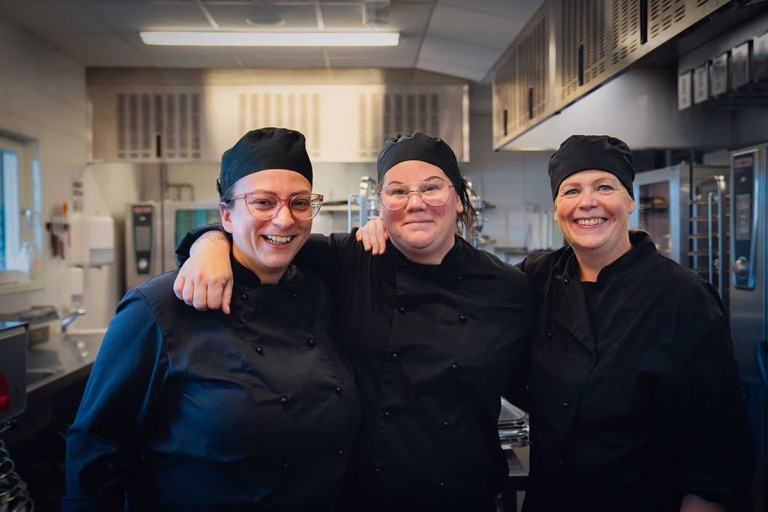
At a small production unit, every day of absence affects the whole team. When resources are limited and roles are broad, you need tools that make it easy to act quickly — with structure, overview and care. For Essity, MedHelp’s platform has become a natural part of daily health and safety work, where preventive measures have room to grow and small changes make a real difference.
“We’re a small workplace where every person matters. If a colleague is away, we might have to shut down a machine. Absence clearly has an impact, but that also shows how important it is to work preventively — with the right tools and the right structure.”
Building a safe and sustainable working environment isn’t just a goal. It’s a condition for running the business at all.
A culture where health and safety is everyone’s responsibility
Isabell describes how Essity has a clear focus on health, safety and working environment — not as an isolated HR area, but as an integrated part of day-to-day leadership.
“We stand in production packing, lifting and moving things. It’s not heavy work in itself, but there are a lot of repetitive movements. That means we need to stay on top of it. It’s about both acute absence and preventing wear and tear over time. We don’t want people to break down after 20 years on the floor.”
MedHelp became a natural part of everyday work
When the unit started using MedHelp’s platform two and a half years ago, the aim was to build structure around sick leave, documentation and dialogue. Today, the platform is woven into both daily work and long-term analysis.
“It was hard to keep track before. Health conversations could get quite vague, you’d sit there trying to remember. ‘You’ve been off six times, but when exactly?’ Now we have the history right there. It saves time and it saves uncertainty.”
The safety committee and working environment committee: statistics that lead to the right action
To move health and safety work forward, the unit collaborates through both a safety committee and a working environment committee. This is where MedHelp’s platform plays a central role.
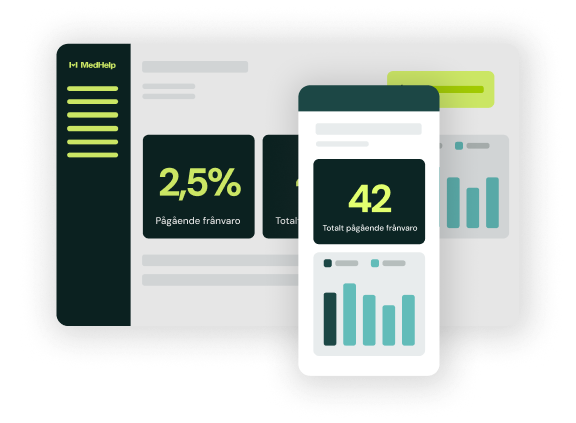
“Four times a year, I pull statistics from the system for the safety committee. It’s easy to extract and gives a clear picture of absence — and more importantly, it shows what type of absence we have. That means we can put the right measures in the right place.”
Isabell explains that the statistics often form the basis for concrete improvements, such as discussions about ergonomics, lifting aids or new routines.
“We use the same data in the working environment committee too, where we discuss longer-term changes. It gives us a shared picture of the situation, and makes it easier to make decisions that actually have an effect.”
Clear overview — key for small teams
For a small unit, being able to quickly see who’s in is especially important, particularly when managers or key people are away.
“Having a system where several of us can see the situation is invaluable. You avoid endless text threads and uncertainty. If I can’t reach the production manager, I can still log in and see: Karin isn’t in today. It’s simple, clear and reassuring.”
The platform doesn’t just support follow-up. It strengthens continuity in daily work too.
Employee support and medical advice
Isabell explains that Essity also uses MedHelp’s medical advisory service and follow-up calls, where employees speak with a nurse when reporting sick.
“Reactions vary. Some find it unfamiliar, others really appreciate it. I think it’s valuable that someone asks questions and follows up. It creates a sense that someone cares.”
She also points out that it’s a good way to give feedback to the employee, while giving the employer a structure to follow.
A tool for long-term health and safety
For Isabell, it’s clear that MedHelp’s platform can also support strategic health and safety work. The unit is currently planning to install a pallet handler to reduce wear injuries to shoulders and backs, something that can be tracked through the system.
“I hope we’ll be able to link measures to results. It won’t show straight away, but if we see fewer absences linked to physical complaints six months on, we’ll know we did the right things.”
A system that strengthens both decisions and culture
Beyond being a practical tool for statistics and follow-up, Isabell believes the platform has helped create a climate where it’s easier to talk about absence, and to act in time.
“It still takes a bit of judgement, of course, but now we have facts behind us. That makes the conversations feel safer, for managers and employees alike.”
A simple solution with a big impact
Isabell sums up MedHelp’s platform as a practical, easy-to-use tool that makes a real difference day to day.
“It’s not advanced. But that’s the point. It’s quick, it’s clear, and it helps us keep documentation and planning together. For us, it’s a natural part of working systematically with health and safety.”
Want to know more about how MedHelp can help you work systematically and preventively with sick leave at your company? Register your interest below and we’ll be in touch soon to tell you more.